Choose the Right Fabric for Every Garment Type

Choosing the right fabric/textile material bring a sketched design to life. It is the basic thing a designer must initially analyse. the correct textile material defines a garment/apparel’s drape, comfort, suitability, durability, ability to incorporate elements like patchwork, embroidery etc. Apart from this, it also helps us analyse its aftercare and launderability (washability). the correct choice of fabric also helps in understanding the season in which a garment can be worn. From the first pencil stroke on a sketchpad to the final stitch on a runway-ready piece, fabric is the soul of fashion.

As per the author's experience in teaching, evaluation of budding designers and interactions with other designer's world over, it was observed that the designers usually design a garment but are unable to select the perfect fabric to execute their collection. This turns into a huge disaster most of the times and even leads to downfall of their brands/couture house.
So, as a designer it is a must to know the basic knowhow of fabrics first and then land up designing a garment or a collection.

Going ahead and understanding the basic knowhows of a textile material, fabric is a sheet of fibres combined together by interloping, interlacing or bonding the fibres together. A fabric’s basic raw material is a fibre. Fibres used in manufacturing of textile fabrics, are either Natural in origin, or Manmade, or they can also be a combination of both natural and manmade fibres called Regenerated Fibres. Let’s dig a little deeper to understand how we decide on what kind of fabric to choose for what type of garment.

Natural Fibres are the ones, that we obtain from nature. Nature implies plants, animals and minerals.

  1. Plant fibres are obtained from stem, leaves, bark, fruit etc.
  2. Animal fibres are obtained from skin, hair, or secretions by the animals
  3. Mineral fibres are obtained from mineral deposits in the earth

The fibres available in the market from any of these sources are tested for their strength, pliability, durability, flexibility, texture, absorbency or moisture retention before being made or constructed into a fabric. they should have ample of strength, durability, pliability and flexibility to be made into a fashion garment/apparel. the texture should be such that it shouldn’t harm the skin, rather protect it from external factors like, cold, heat, wind, snow, ice, rain, dust etc. For comfort and climatic conditions, it should have the ability to absorb moisture. When we perspire/sweat, the sweat needs to be absorbed well by the fabric, to prevent any skin infection or allergenic reactions.

Qualities of Natural Fibres
  1. Natural fibers in general are hypoallergenic, extremely good for the skin and have high water absorbency.
  2. All cellulosic natural fibers can be given a tumble wash, until any dye or print is applied to it. these fibres gain almost double the strength in wet conditions, hence in day-to-day life, you may have observed that washing and wringing of cotton, linen etc. (the summer wear fabric) never destroys or damages the fabric.
  3. All Protein fabrics need to be dry cleaned as tumble wash or washing and wringing reduces their strength, makes the weak and prone to damages very quickly. They are wonderful fabrics for winterwear as their natural property is to trap and hold the body heat.
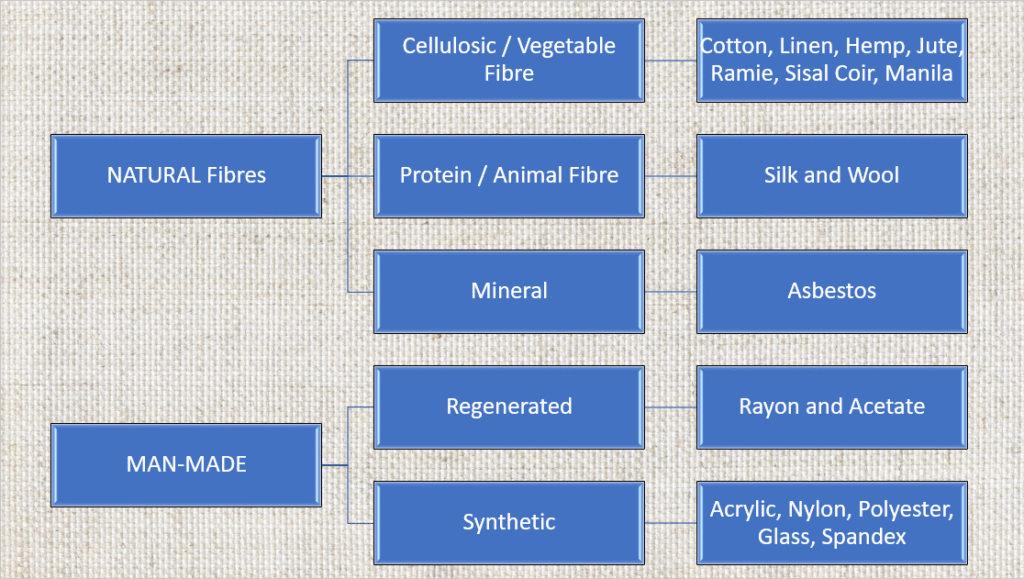
Man made fibres on the other hand are of two types:

  1. Regenerated: The ones which are made by mixing a natural fiber with a chemical in which it dissolves and is then made into a fabric eg Rayon and Acetate
  2. Synthetic fibres: The ones that are made by combining two or more different chemicals and then made into a fabric eg: Acrylic, Nylon, Polyester, Glass, Spandex/Lycra

These are called man-made fibres as they are manufactured in chemical laboratories or plants by mixing chemical compound that on cooling, solidify into fibres or yarns and are eventually made into fabrics.

Qualities of Man- Made Fibres
  1. All man-made fibres get weak when wet.
  2. All regenerated fibres like Rayon, Viscose, Tencel, Lyocell etc. absorb moisture, but less than the natural fibers and are mostly suitable for summer wear, during rainy season or in pleasant weather conditions. It is advised not to use them as undergarments or as lingerie wear as they can cause allergies or skin irritation.
  3. All synthetic fibers like Polyester, Nylon, Spandex etc. are hydrophobic and do not absorb much water. they are therefore used for making swimwear, fishing nets, winter wear jackets, as paddings for quilted garments, winter quilts etc.

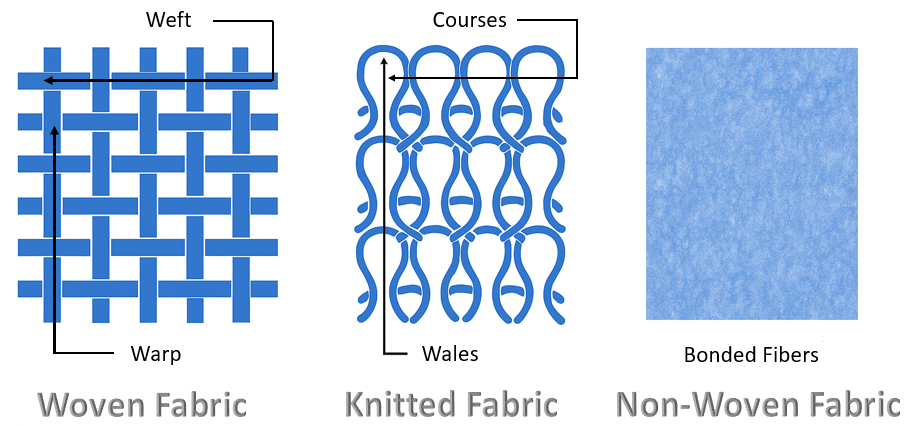
The fibres obtained from above sources, are made into yarns, the long strands of fibres combined together by the process of spinning. These yarns can be made thick or thin depending on the fabric to be constructed. For example, georgette needs a thin yarn for construction whereas denim needs a thick yarn. The thickness or thinness of a yarn determines the weight of a fabric called GSM (Gram per square meter). Higher the GSM, heavier the fabric, lesser the GSM, lighter the fabric. Another factor is the thread count of a fabric.  To understand the basics of thread count, it’s important to know the types of fabric and how each one is made. There are 3 ways to construct fabrics – interlacing, interloping and bonding the fibres together.

  • WOVEN FABRICS: Made by interlacing two sets of yarns, the lengthwise ones known as WARP and width wise, WEFT yarns at an angle of 90 degrees
  • KNITTED FABRICS: Made by interloping minimum one set of yarn. It has loops running in lengthwise direction, known as WALES and other in width wise direction, known as COURSES.
  • NON-WOVEN FABRICS: Made by bonding or entangling fibres with one another.
THREAD COUNT

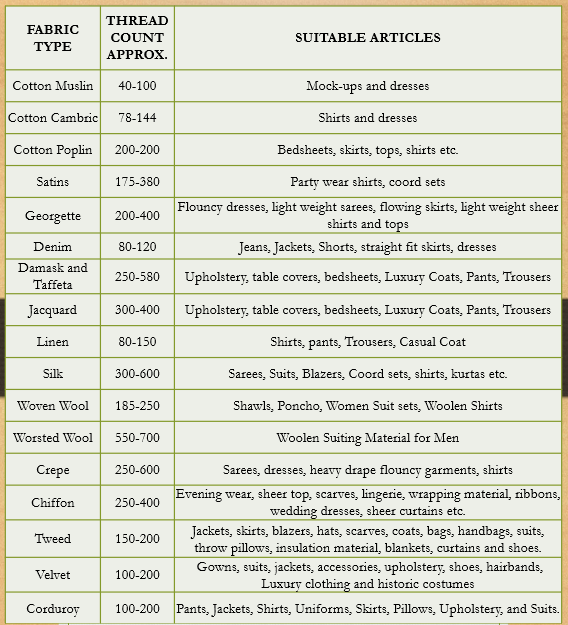
Thread count can be calculated for woven fabrics by evaluating the number of yarns per square inch of a woven fabric. It is calculated by summing up the number of warp and weft yarns per inch of a woven fabric of any type or origin. For example, in a fabric if there are 133 warp yarns and 100 weft yarns, the thread count of that fabric will be 133+100 = 233TC.

The fabrics can be made using any fibres, may they be natural or manmade. Thread counts are mostly mentioned on the, commercially on home furnishing fabrics like bedsheets, table covers, table mats, throws etc., but they are essential even while selecting fabrics for designing garments. While going out purchasing fabrics one can enquire for the thread count to match with their designed collection.

Mentioned here are some of the majorly used fabrics and their approximate average Thread count, available commercially

But it must be noted that it is not the only parameter that determines the quality of a fabric. The other factors are
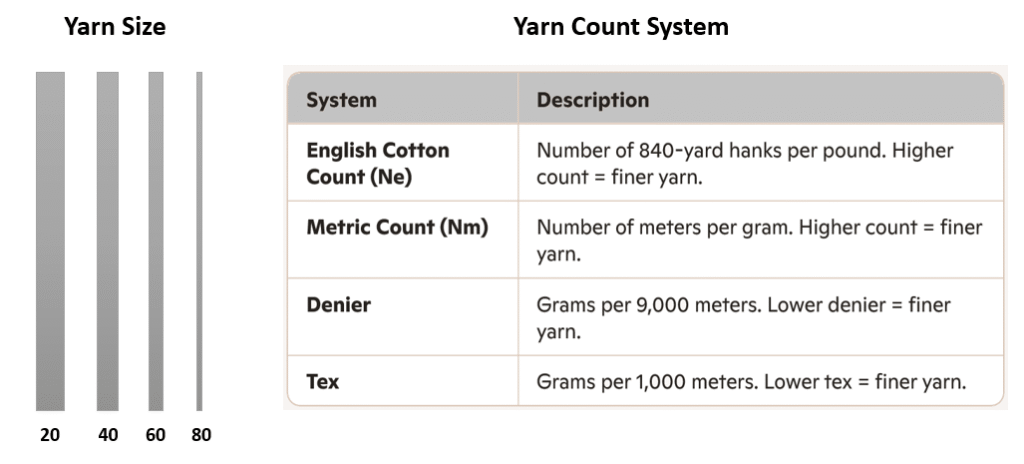
  • YARN SIZE – It determines the weight of a fabric, higher the yarn size, lighter the fabric. It is measured in two systems, namely Yarn Count System (It measures the length per unit weight of yarn) and Yarn Weight Category. The yarn count system is majorly used by fashion and textile industry and is measured in the unit Ne. So, a 50 Ne cotton yarn is finer than a 10 Ne yarn.
  • YARN QUALITY – It determines the longevity of the fabric. The better the origin, the longer will be the life of a fabric.
  • WEAVE – The more compact the weave, higher will be the thread count, more will be the strength and tougher will be the drape of the fabric.
Want to know more about Weaving, Knitting, Non-Wovens, Fabrics, Yarns or Fibres? Comment below
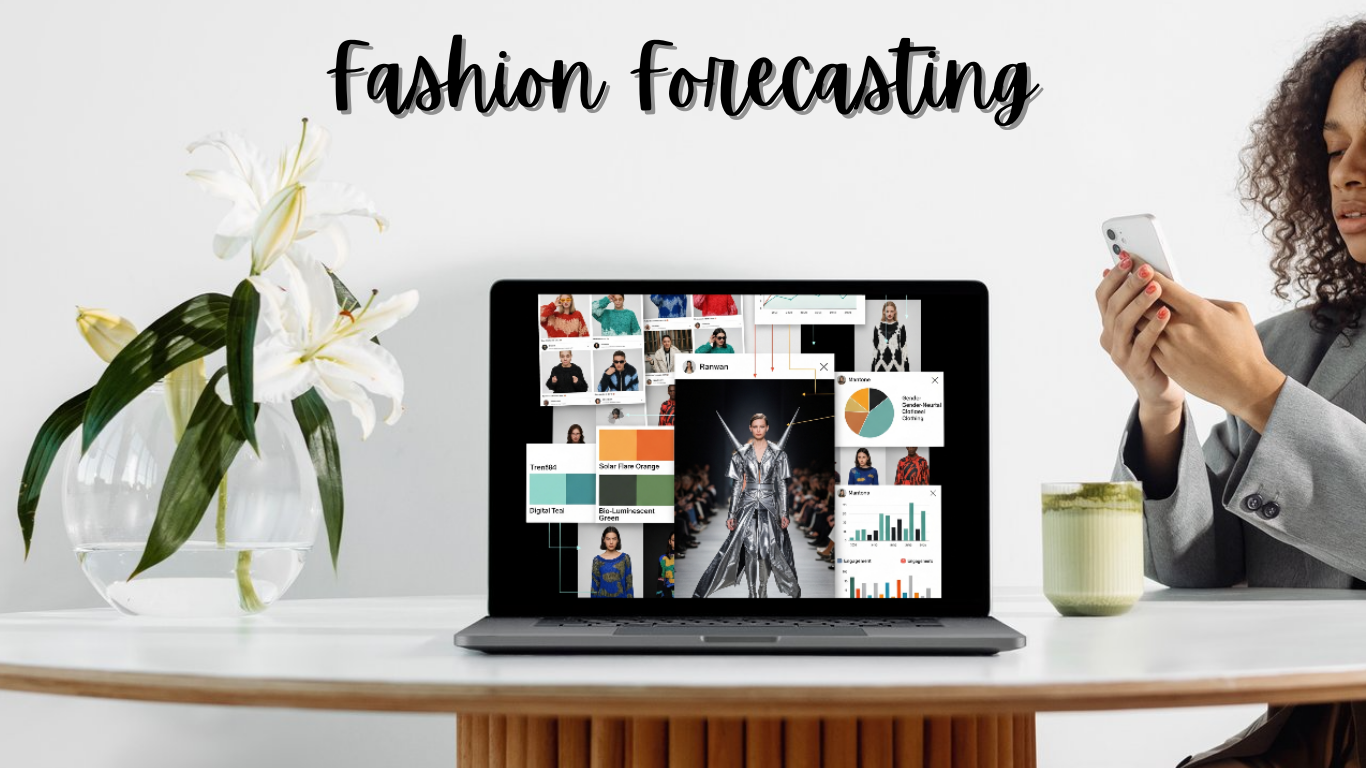
Fashion Forecasting: How to predict or spot fashion trends?

Future Fitz: The Art & Tech of Future Forecasting

Ever wonder how brands know we’re all about oversized blazers one season and micro-minis the next? It’s not magic, it’s a whole vibe—and a serious science. Welcome to the world of fashion forecasting. It’s the secret sauce that keeps the fashion industry a step ahead, predicting what we’ll be wearing, loving, and obsessing over before it even hits the racks.

At its core, fashion forecasting is the art of predicting future trends. It’s a mix of cultural instinct, creative insight, and hardcore data analysis that helps designers and brands figure out what colours, silhouettes, fabrics, and styles are about to blow up in the coming FASHION SEASON. It’s not just about clothes; it’s about predicting society’s mood and consumer behaviour. Fashion forecasting is like being a style detective, a trend-spotting psychic who uses data and gut feeling to predict what’s next. From the runway to the streets, social media, and even global events. It’s a complex, multi-layered process that’s part art, part science. Here’s how it all goes down:

1. The Deep Dive: Research and Data Analysis: Before a single design sketch is made, forecasters are out there, gathering intel from every corner of culture. They don’t just look at what’s hot right now; they’re analysing what’s bubbling up from the streets, what’s a subtle shift on social media, and what macro-trends (like sustainability or the rise of AI) are shaping society. This isn’t just about looking at pretty pictures—it’s about crunching numbers. They’re tracking sales data, search engine queries, and social media analytics to get a clear picture of what consumers are actually interested in.

2. The Creative Mashup: Mood Board & Trend Identification: Once the data is in, the magic begins. Forecasters start to connect the dots, clustering their findings into key themes. This is where the mood board comes to life. It’s a visual story that brings together color palettes, fabric swatches, textures, and key silhouettes. They’ll pull inspiration from everything—a viral TikTok dance, a trolling social media feed, hashtags, visuals, a piece of avant-garde art, or a cultural moment that’s sparking conversation. These mood boards are more than just a collage; they’re the DNA of a future collection, a visual guide that tells a compelling story.

3. The Storytelling: Communicating the Forecast: The final step is translating all of this research and creativity into a clear, actionable forecast. This often takes the form of a detailed trend report. It’s a comprehensive guide that not only shows what’s coming but also explains why. These reports are the roadmap for the entire fashion pipeline—from designers who need to know what to create, to manufacturers who need to source materials, to retailers who need to stock their shelves. It’s the ultimate plan to ensure the right products get to the right people at the right time.

Ultimately, the process of fashion forecasting is what keeps the industry moving forward, pushing us beyond the trends of yesterday and into the styles of tomorrow. It’s a dynamic, ever-evolving process that’s more relevant than ever in our hyper-connected world.

Sources That Slay the Trend Game

So now that you have got the lowdown on the fashion forecasting process. Now, where do the pros—and the brands you love—get their intel? Forget the crystal ball; we’re diving into the real sources that tell us what’s next.

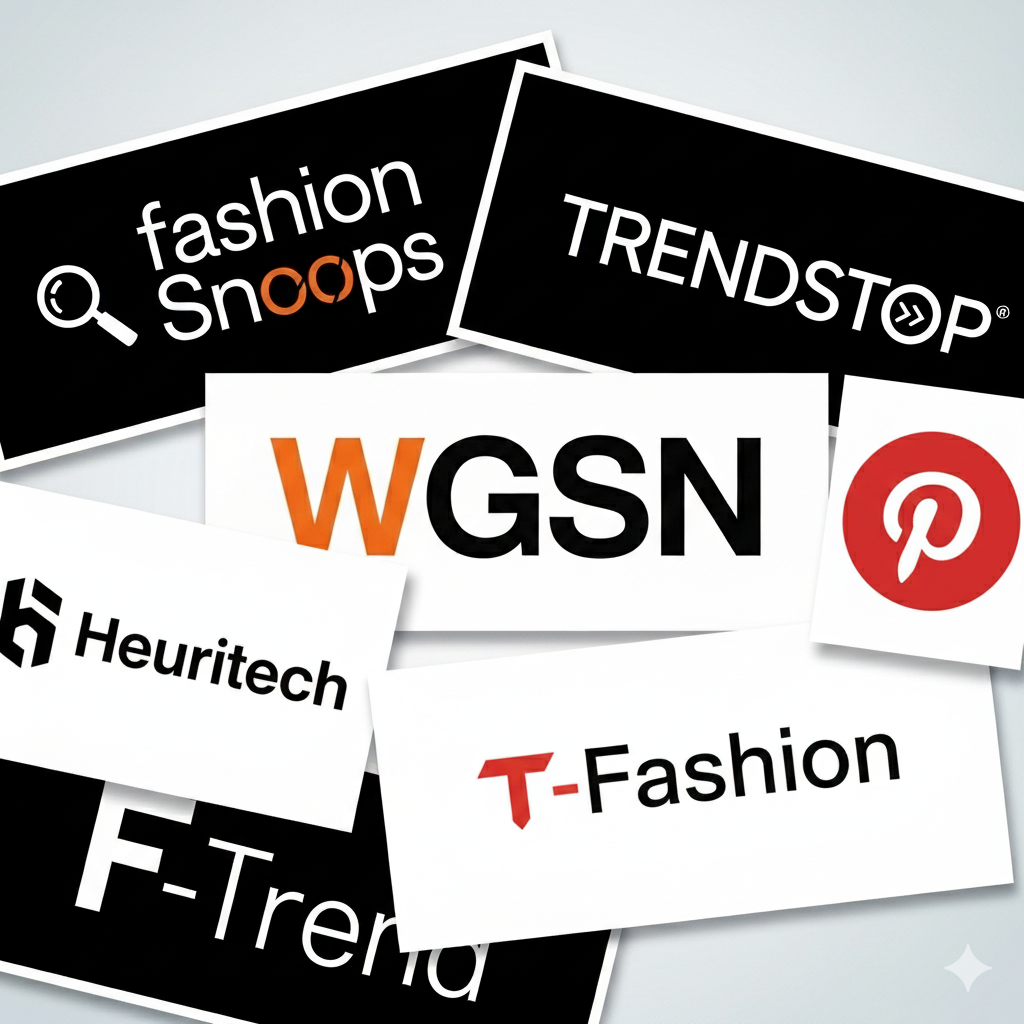
  1. The Industry Powerhouses (The Paid-For Forecasts): These are the big leagues, the platforms that fashion schools, designers, and major corporations pay big bucks to access. They’re a goldmine of data and analysis.

WGSN (Worth Global Style Network): The OG. They’ve been around forever and are basically the Wikipedia of trend forecasting. They predict everything from colours and prints to consumer behaviour years in advance.

Fashion Snoops: Known for their deep-dive, creative trend reports. They’re all about the vibe and the story behind a trend, blending cultural insights with commercial viability.

Trendstop: This one’s all about real-time trend intelligence. They are super-fast, delivering insights on fashion, beauty, and lifestyle to help brands stay ahead of the curve.

F-trend: They map trends across 19 clothing categories and accessories, focusing on consumer behaviour and providing regional insights.

2. AI-Powered Trend Detectives: The future is now! These platforms use AI to scan billions of images and data points to give a scientific edge to forecasting.

  • Heuritech: They use AI to analyze what people are actually wearing on social media and the runways, giving brands a data-driven look at what’s rising and what’s on the decline.
  • T-Fashion: A full-stack AI platform that provides real-time trend data, helping designers research, create, and collaborate at lightning speed.

3. The Free & Fierce Resources (Your Vibe Check): For the upcoming generation, the digital natives, a lot of forecasting happens on the social media feeds. You can get a legit head start just by paying attention.

  • Pinterest Predicts: Pinterest’s annual report is fire. They track what’s blowing up on the platform and predict what’s going to be big next year. It’s a goldmine for aesthetic inspiration.
  • Instagram: The birthplace of micro-trends. Watch what’s going viral—the core aesthetics, the styling hacks, and the Do-it-Yourself (DIYs). Pay attention to everything from how people are layering to the color palettes that are taking over your FYP (For-your-Page).
  • Google Trends: This is your data playground. You can search for any term—’Quiet Luxury,’ ‘Goth‘, ‘Retro‘, ‘Balletcore,’ ‘Gorpcore‘—and see its popularity over time. It’s a literal graph of a trend’s life cycle.
DROP YOUR VIBE IN THE COMMENTS 

What’s a micro-trend you’re seeing everywhere right now that you think is about to become a major moment? Is it the return of low-rise jeans? The rise of crochet accessories? Let us know what you’re predicting!

#FashionForecasting #SustainableStyle #FutureFits #Trendsetter

The First sign of Fashion: A History of Modesty and its Origin

‘Fig leaf to First fabric- Fashion, a pure need and Necessity’

Fashion in today’s time has evolved as a way of self-expression, but thousands of years ago, fashion originated as a blend of basic need and survival. It began with the prime need to shield the skin against harsh climatic conditions like heat, cold, dirt, dust, snow, rain etc. and was so known by the name ‘Second Skin’. The Bible too Reads:

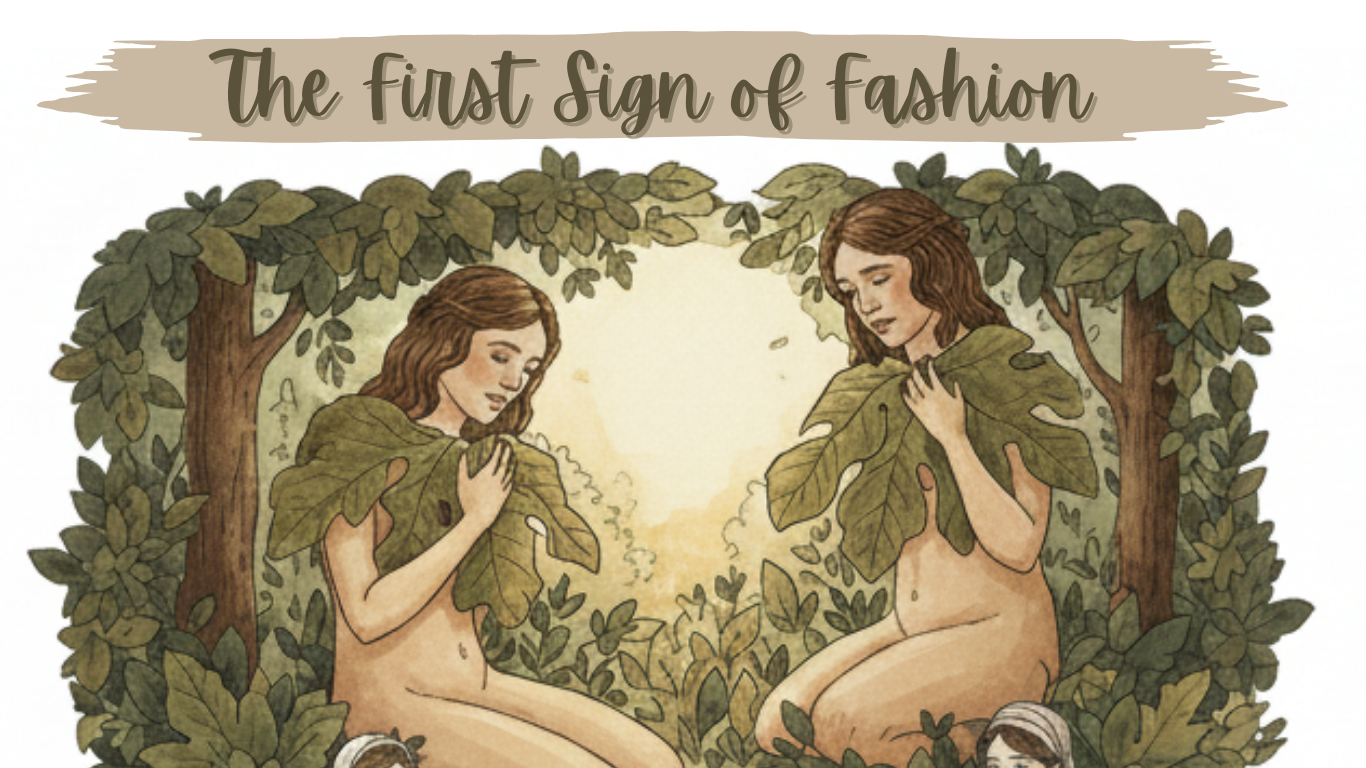
“And the eyes of Adam and Eve opened, they saw that they were naked, so they sew Fig Leaves together, and made themselves Aprons”

So, earlier animal skin, fur, fig leaves, barks of trees etc. were the only form of clothing used to protect oneself from harsh climatic condition. Going even before this time… people used to adorn their bodies with paint, shells, beads, feathers etc.

Fashion evolved with evolution of Civilizations. By the beginning of bronze age, as studied by archeologists, world over, traces of woven fabric from natural fibers could be seen in the remains of the civilized sites. The Egyptians were the ones to discover a fiber first that was later converted into a fabric, near around 2000 BC. That fiber was fine LINEN, obtained from the stem/bast of the Flax Plant, and is widely used as a Trendy summer wear fabric even today. (Image Source: camixa.com).

Brands like H&M, Zara, Arrow, Raymonds and many others are manufacturing ready-to-wear garment collections using linen. It is a highly sustainable fiber and hence is a proven eco-conscious fiber. Eco-conscious fibers are the ones that minimize environmental impact throughout their lifecycle from sowing of seed to production to consumption and finally disposal.

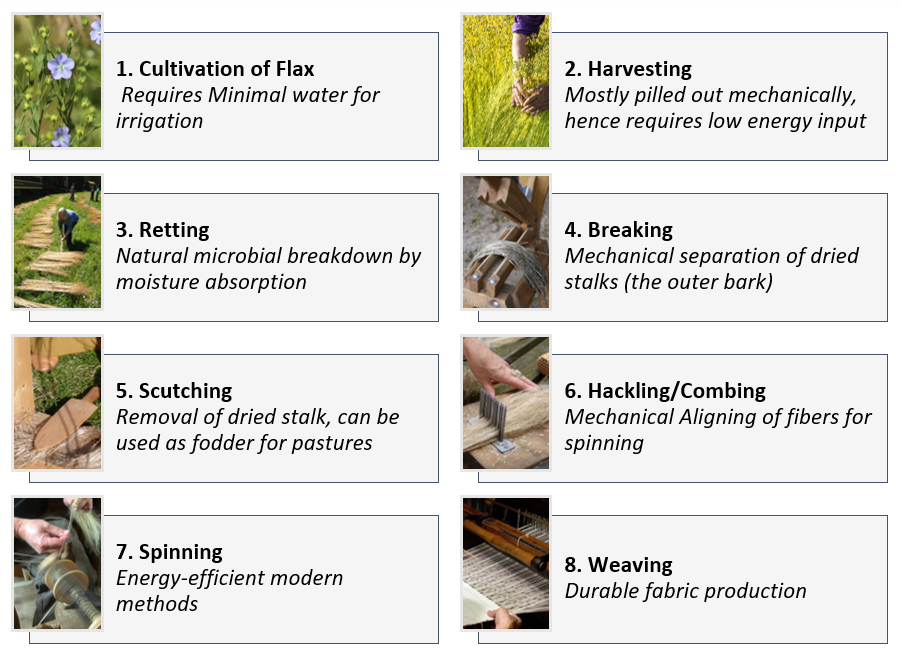
Flax fibers are amongst the oldest grown fibers on earth, known to mankind. Flax plan grows in dry and hot climatic condition. Egypt being very near to equator since ancient times, had the appropriate climatic condition for flax plant to grow. It’s generally a 2-4 feet long plant that has the strong, flexible fibers running in its stalk/ stem/ bast till the root tips. It is hence uprooted or pulled from the soil to process it into a fiber. The processing of linen’s lifecycle is shown in the chart.

Each step stated in the chart uses manual or light mechanical procedure, in ancient times there were neither power generated machineries (a major source of carbon footprint today) nor were there technological sound instruments. Today we stand at the crossroads of innovation, sustainability and inclusivity. Fashion redefines itself everyday —not just as a form of expression, but also as a force to bring about change. The yarns of the past have woven an opulent tapestry, but the future of fashion belongs to this generation, to innovate with intention, creativity, and conscience. Let’s pledge to use fashion in a sustainable way, buy consciously, buy less, use eco-conscious fibers like Linen, Cotton, Hemp, Jute, Ramie, Sisal, Coir, Manila, Bamboo, Silk, Wool, organic fibers and all natural sources.

“Fashion is no longer just stitched in a fabric—it’s embroidered with ethics, coded with tech, and dyed in the colors of change. Let’s not just wear fashion—let’s shape it with Sustainably and inclusively”


RSS
Follow by Email
Instagram
Telegram
WhatsApp