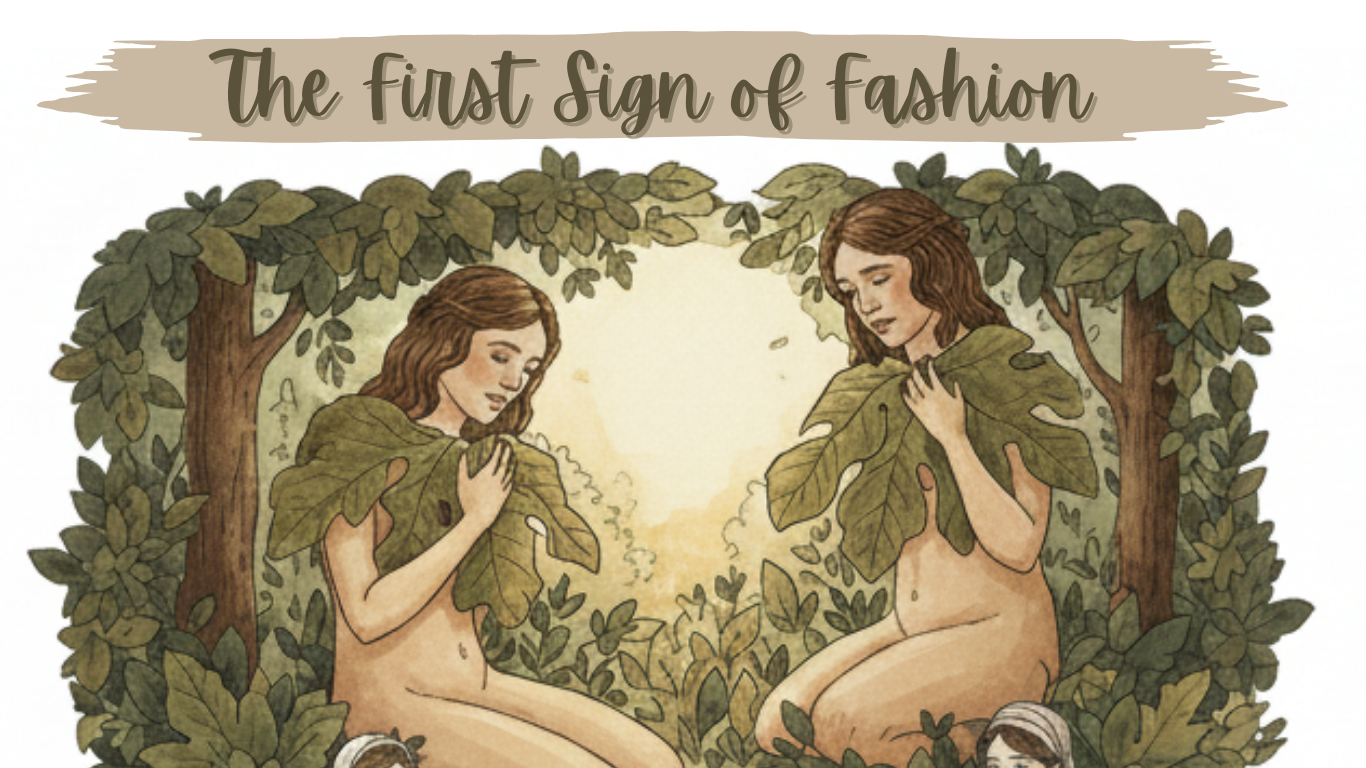
‘Fig leaf to First fabric- Fashion, a pure need and Necessity’
Fashion in today’s time has evolved as a way of self-expression, but thousands of years ago, fashion originated as a blend of basic need and survival. It began with the prime need to shield the skin against harsh climatic conditions like heat, cold, dirt, dust, snow, rain etc. and was so known by the name ‘Second Skin’. The Bible too Reads:
“And the eyes of Adam and Eve opened, they saw that they were naked, so they sew Fig Leaves together, and made themselves Aprons”
So, earlier animal skin, fur, fig leaves, barks of trees etc. were the only form of clothing used to protect oneself from harsh climatic condition. Going even before this time… people used to adorn their bodies with paint, shells, beads, feathers etc.
Fashion evolved with evolution of Civilizations. By the beginning of bronze age, as studied by archeologists, world over, traces of woven fabric from natural fibers could be seen in the remains of the civilized sites. The Egyptians were the ones to discover a fiber first that was later converted into a fabric, near around 2000 BC. That fiber was fine LINEN, obtained from the stem/bast of the Flax Plant, and is widely used as a Trendy summer wear fabric even today. (Image Source: camixa.com).
Brands like H&M, Zara, Arrow, Raymonds and many others are manufacturing ready-to-wear garment collections using linen. It is a highly sustainable fiber and hence is a proven eco-conscious fiber. Eco-conscious fibers are the ones that minimize environmental impact throughout their lifecycle from sowing of seed to production to consumption and finally disposal.
Flax fibers are amongst the oldest grown fibers on earth, known to mankind. Flax plan grows in dry and hot climatic condition. Egypt being very near to equator since ancient times, had the appropriate climatic condition for flax plant to grow. It’s generally a 2-4 feet long plant that has the strong, flexible fibers running in its stalk/ stem/ bast till the root tips. It is hence uprooted or pulled from the soil to process it into a fiber. The processing of linen’s lifecycle is shown in the chart.
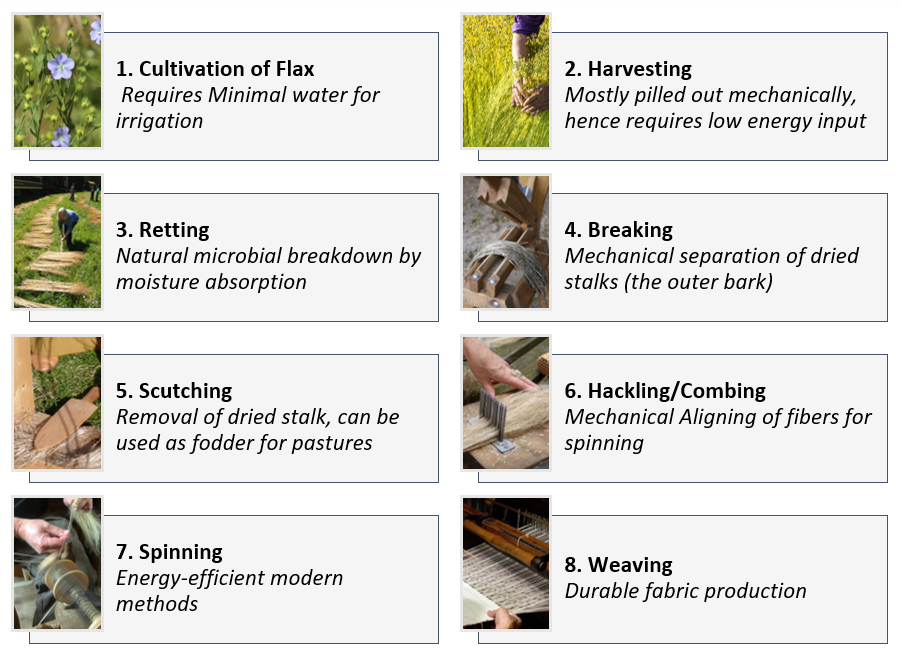
Each step stated in the chart uses manual or light mechanical procedure, in ancient times there were neither power generated machineries (a major source of carbon footprint today) nor were there technological sound instruments. Today we stand at the crossroads of innovation, sustainability and inclusivity. Fashion redefines itself everyday —not just as a form of expression, but also as a force to bring about change. The yarns of the past have woven an opulent tapestry, but the future of fashion belongs to this generation, to innovate with intention, creativity, and conscience. Let’s pledge to use fashion in a sustainable way, buy consciously, buy less, use eco-conscious fibers like Linen, Cotton, Hemp, Jute, Ramie, Sisal, Coir, Manila, Bamboo, Silk, Wool, organic fibers and all natural sources.
“Fashion is no longer just stitched in a fabric—it’s embroidered with ethics, coded with tech, and dyed in the colors of change. Let’s not just wear fashion—let’s shape it with Sustainably and inclusively”