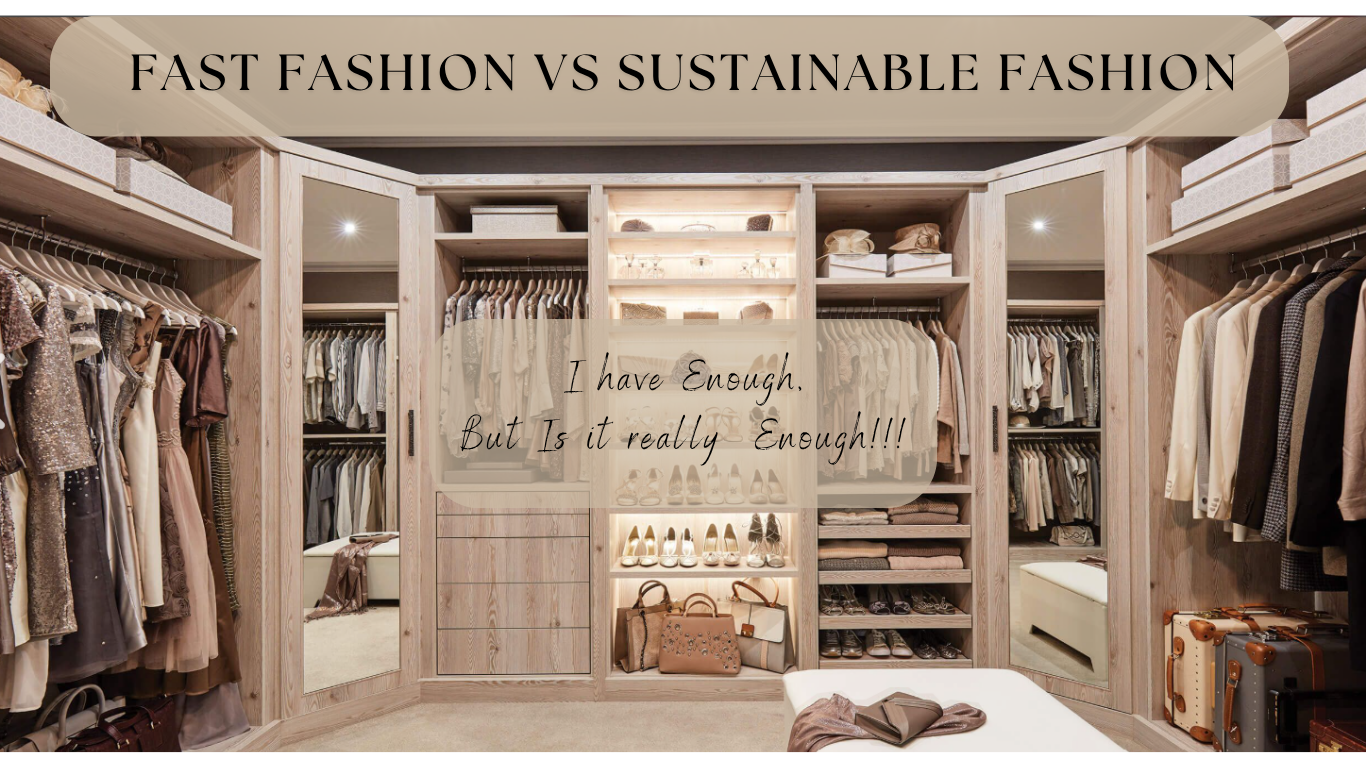
Fast Fashion… What is it? Sustainable Fashion… What is it? Are we as consumers aware of these terms? What’s the hype! Why do we need to know about it? Why should we follow it?
Fast fashion are the trendy items, that we want or desire. It’s rarely out of need that we go in for buying Fast fashion. Is it not true, that whatever new and trendy enters the market goes viral? Why, because we all like it, but do we really “need” it? The answer is “NO”
Fast fashion is called so, because it refers to fashion items that have a quick turnover, are trendy, inexpensive garments. They meet the insatiable demands of consumers seeking up-to-the-minute trendy, in vogue styles.
The exact opposite is Sustainable fashion, the environmentally conscious practices involving from scratch to end, prioritizing longevity, high quality, and responsible sourcing.
FAST FASHION
There are a lot of trends that we see emerging in every season and every forecast. these trends are either set by authorised agencies like WGSN or by trend setters like movies, social media, influencers, designers etc. Yes, we all love to be fashionable, trendy, but why is fast fashion being opposed by most?
Fast fashion is a Garment and fashion accessories industry model built on producing trendy, inexpensive apparels, shoes. bags, belts, ties and other fashion accessories at rapid speed, often copying runway, cinema, social media, influencers or celebrity styles and pushing them into stores within a span of a few weeks, due to rise in demand.
While it makes fashion accessible and constantly refreshed, it relies on non-ecofriendly, inexpensive and low-priced inexpensive materials and cheap labor, leading to poor quality, short lifespans, and a culture of disposability. This cycle fuels overconsumption, generates massive textile waste, creates no reusability and contributes to pollution, while also raising concerns about exploitative working conditions.
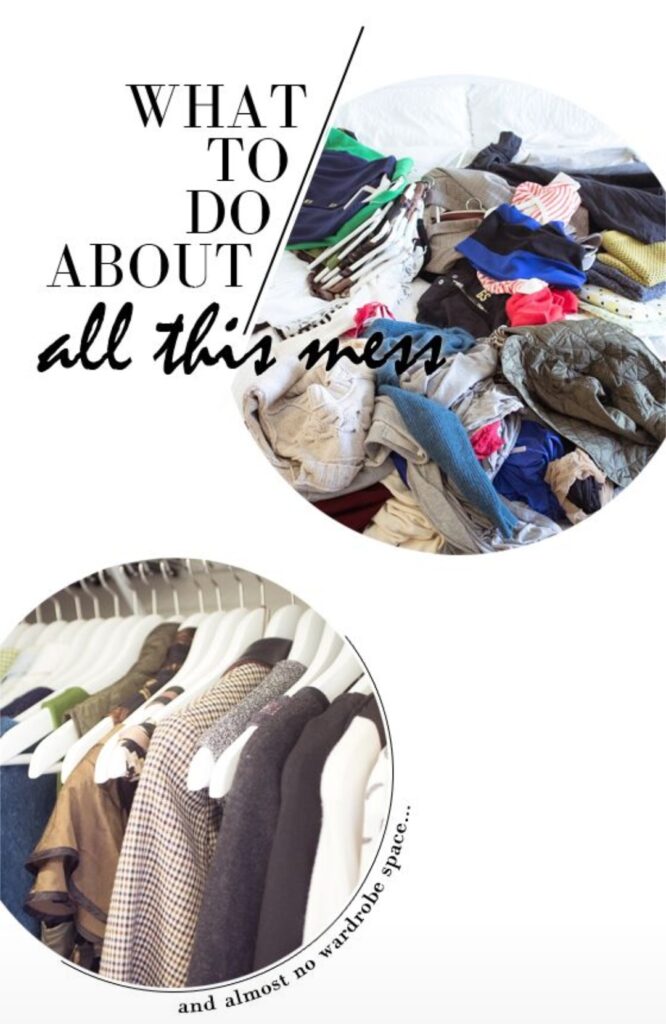
Why is Fast Fashion being Opposed?
Fast fashion is being opposed because the manufacturing of fast fashion garments, from scratch to end, involves the use of non-environmentally friendly practices. From sourcing of cheap, non-biodegradable, easy to wear, crease resistant and easy maintenance fabrics ‘THE SYNTHETICS’ to the use of heavy machinery from pattern making, to cutting, to stitching and finally to finishing and packaging, leads to exorbitant amount of carbon footprint emission.
The fast fashion industry on one hand relies on cheap materials and rapid production, leading to massive textile waste, water pollution, and high carbon emissions, and on the other end, ‘SYNTHETIC FABRICS’ shed microplastics into oceans, which harms the life under sea, polluting the seas and the marine wildlife. At the same time, many workers in supply chains face unsafe conditions along with low wages. By encouraging disposable clothing and constant trend-chasing, fast fashion promotes overconsumption and undermines sustainability, sparking calls for more ethical, eco-friendly alternatives like sustainable fashion.
WHY IS FAST FASHION A BIG CONCERN OR A THREAT?
Fashion industry is globally the most polluting industry in the world today, due to use of fairly high amount of water during its processing. The highest amount of effluents in the form of toxic chemicals, gas emissions, dye run-offs and landfill due to excessive disposals has taken a toll on environmentalists, scientists, technologists and finally the government. This is a major concern for this generation, as the future is dependent on what we do, how we act and how we conserve our resources today!
Besides this, it also plays an important role in ensuring that the labour force is paid fairly, they are generally hired on per day basis, weather you get 10 garments made or 300 garments made per day, their wages remain the same. In the fast fashion industry, the labour is forced to work on a large number of pieces and gets paid less. This is one of the reasons for cheap price of fast fashion products. But ethically it is an extremely unfair practice.
It reduces the scope of innovation amongst consumers. The consumers tend to buy instead of experimenting with their existing fashion products and accessories. In today’s time, when styling tips are hovering all over the social media, one must make it a point to experiment and innovate rather than go for impulse buying.
Most of the fashion products, that go excess in the wardrobe, land in the landfills. We must make sure that we cultivate healthy and mindful buying practices. One must invest in high-quality pieces that last longer, go for designs that embody timeless styles, so your clothes do not go out of fashion quickly. Most of the sustainable brands are now producing such fashion accessories, hence, the more conscious we become, the better will be our future.
SUSTAINABLE FASHION
Sustainable fashion is the one that can sustain for years together, is environment friendly, during production as well as post disposal of products. It is a movement started for spreading awareness with an aim to protect and preserve our planet earth for years and generations to come. Sustainable fashion helps reduce environmental damage and supports fair labor practices.
Sustainable fashion is about making environmentally friendly choices, like reducing impulse buying behavior, investing on fast fashion, fast textile processing’s like use of chemical dyes and prints, avoiding the purchase of non-biodegradable fabrics, regarding the clothes you wear. It uses sustainable options like organic cotton, reused fabrics, and natural dyes.
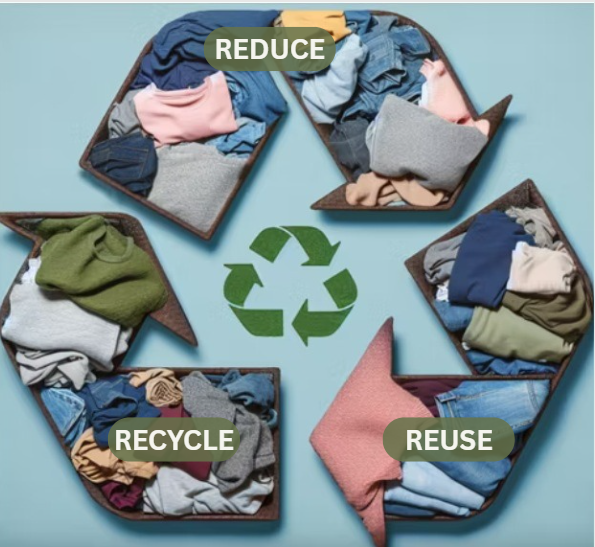
- REDUCE the use of Non environment friendly products.
- REUSE the fashion items you wish to throw away. For ex. Buttons, Patches of Prints, Dyes, Motifs, Accessories and fabric can be cut and stitched together to create a novel design garment.
- RECYCLE the non-biodegradable products into new articles of day-to-day use, or there are organizations that are collecting fashion waste and recycling or upcycling them into new products.
SUSTAINABLE INDIAN FASHION BRANDS